
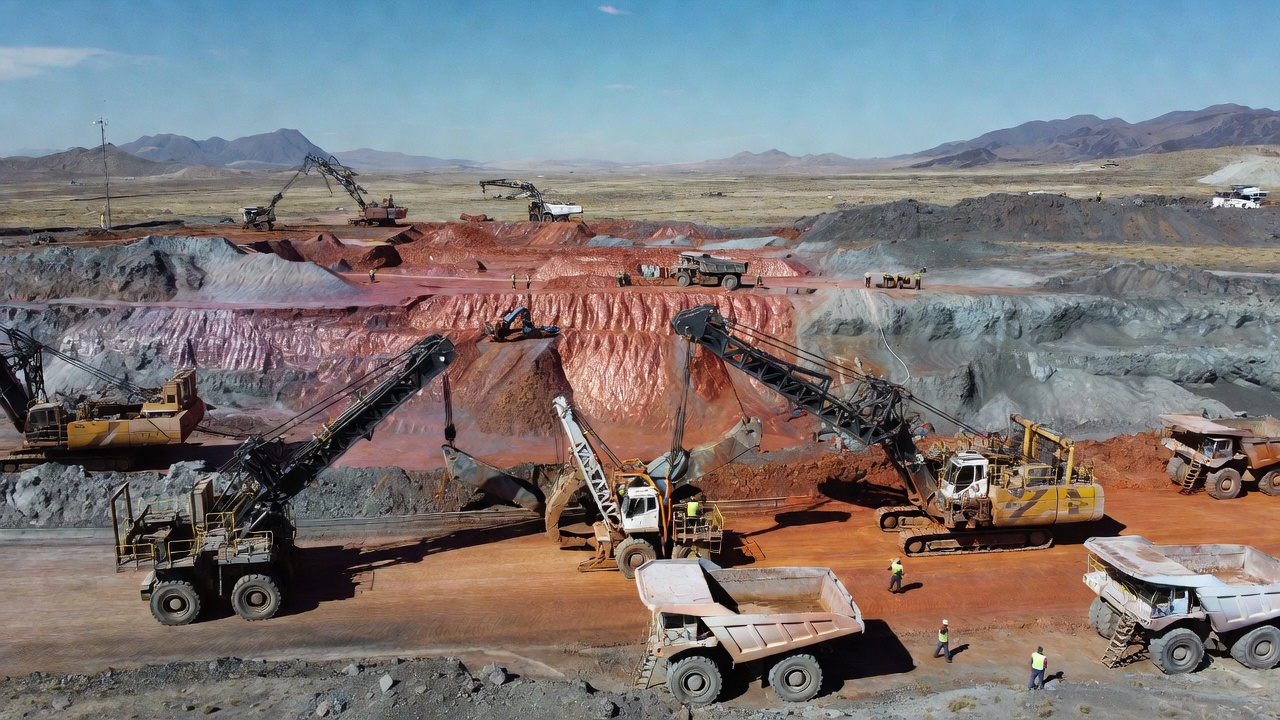
The global metals market is on the cusp of its most profound transformation since the China-led super-cycle of the 2000s, but this new era will be driven not by a single macro narrative, but by fragmentation, aggressive policy shifts, and mounting geopolitical tensions, ING Group said on Monday.
While China is still a major consumer, its dominance over global metals demand has lessened.
The current demand landscape is more nuanced, driven by specific sectors like electrification, clean energy, defence, and data infrastructure, rather than broad industrial growth.
“However, this shift is uneven, policy-driven and highly sensitive to technology choices and regulation,” Ewa Manthey, commodities strategist at ING Group, said in a report.
Diverse demand drivers
The metals essential for electrification are now being driven more by the adoption of technology and governmental policy incentives than by conventional industrial cycles, Manthey said.
The current rally in metals is being driven by those essential for worldwide electrification.
As 2025 concluded, silver achieved a historic milestone, soaring past $80 per ounce for the first time, fueled by a December rally that exceeded 25%.
In the same period, copper also closed the year on a high note, setting multiple all-time records.
With a 42% climb in 2025, copper was the best-performing metal among the six industrial metals traded on the LME.
Copper and silver are recognised for their growing strategic importance, both included on the US Geological Survey List of Critical Minerals.
Copper is vital for developing grid infrastructure, renewable energy, and electric vehicles.
Meanwhile, silver’s crucial function in solar panels and advanced electronics has elevated its status.
“New sources of demand are also emerging, with data centres and AI infrastructure becoming major consumers of metals such as copper and aluminium,” Manthey said.
Rising defence spending across multiple regions is boosting the need for aluminium, titanium, copper and specialty alloys.
Conversely, traditional metals, like iron ore or zinc, tied to construction, infrastructure, and global manufacturing, are more sensitive to cyclical economic conditions.
Less elastic supply
The speed of supply increases in response to higher prices is now limited.
This rigidity stems from multiple factors: years of insufficient investment, the necessity of processing lower-quality ore, and protracted permitting processes.
Moreover, environmental and social restrictions, particularly within developed nations, are intensifying this constraint.
Resource nationalism is increasingly shaping metals markets, exemplified by Indonesia’s ban on nickel ore exports and China’s stricter control over rare earth exports, according to the ING report.
This broader trend reflects governments’ efforts to restructure supply chains to both capture greater value and secure vital strategic materials.
Consequently, this makes supply chains riskier and slows the availability of materials.
Even as prices climb, the introduction of new supply is sluggish, often originating from regions burdened with elevated geopolitical or ESG (Environmental, Social, and Governance) risks.
“The result is a market where tightness persists longer, price spikes are more likely, and volatility is structurally higher,” Manthey said.
Geopolitics play major role
Given their strategic importance, critical minerals are increasingly central to industrial policy, leading to the implementation of measures such as export controls and stockpiling.
Recent years have brought numerous examples of policy intervention influencing the flow of metals, particularly for critical raw materials.
These include China’s imposition of export restrictions on rare earths, gallium, germanium, and antimony, in addition to wider controls on trade and technology.
Governments are rapidly building critical mineral reserves to counter supply chain risks, particularly reliance on single suppliers like China.
For instance, the US Pentagon plans to procure up to $1 billion worth of critical minerals, including cobalt, antimony, tantalum, and scandium, as part of a global stockpiling effort.
The European Union is also taking proactive steps to secure its supply of critical raw materials.
Under the new RESourceEU Action Plan, joint purchasing and stockpiling initiatives are set to begin in 2026.
This effort is a direct result of the Critical Raw Materials Act (CRMA) and is designed to ensure the availability of materials essential for green technologies and defence.
Stockpiling, which operates on distinct procurement cycles, is not influenced by price, unlike commercial demand. This introduces an additional element of volatility.
“As more governments accelerate efforts to bolster national stockpiles, it is likely to become a persistent feature of metal markets’ dynamics,” Manthey said.
Markets that once reacted primarily to economic data are now increasingly shaped by diplomacy, sanctions and industrial policy – a structural shift reshaping pricing dynamics and global flows.
Decoupling from the past
“Taken together, these forces suggest the next metals cycle will look fundamentally different from those of the past,” Manthey said.
The new phase for metals markets will be shaped by diversified demand sources driven by electrification, defence, and digital infrastructure, according to Manthey.
This new phase will also be characterised by slower supply responses amid more constrained and politicised supply, increased volatility stemming from geopolitics and decarbonisation, and the growing role of stockpiling and defence spending, the report showed.
Understanding these drivers will be central to navigating metals markets in 2026 and beyond.
The post Fragmentation, geopolitics, electrification signal fundamentally new metals era: ING appeared first on Invezz