

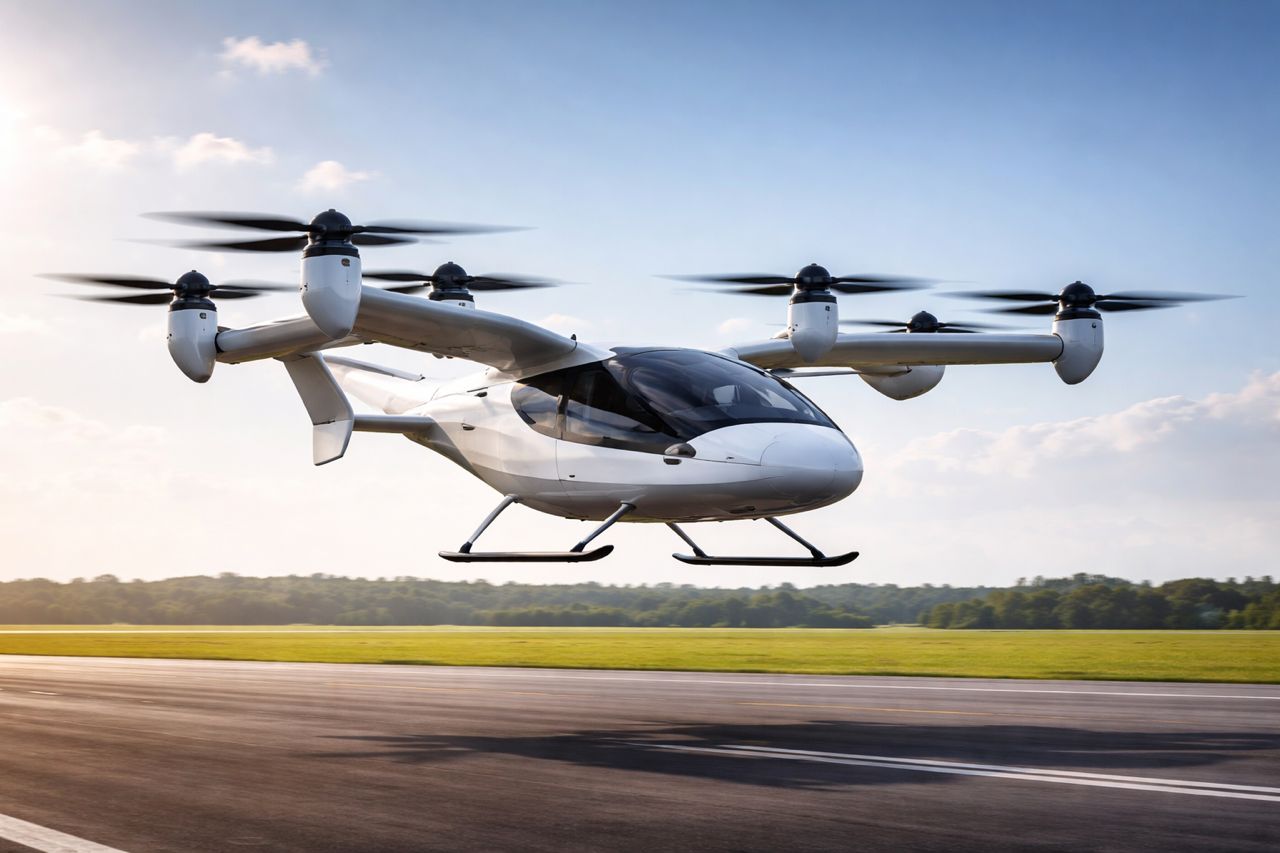
Eve, Embraer’s electric aircraft subsidiary, said on Friday that its full-scale electric “flying car” prototype has completed its first flight, marking a key step in the development of its electric vertical take-off and landing (eVTOL) aircraft.
The flight took place at Embraer’s Gavião Peixoto facility in Brazil and formally launched Eve’s flight test campaign.
According to the company, the prototype’s performance was consistent with internal expectations and modelling, validating core design assumptions.
The milestone is an important step toward type certification and eventual commercial operations.
Eve noted that the first flight was delivered within its previously communicated timeline, which had targeted late 2025 or early 2026.
With the initial flight completed, the company will now move into a more intensive testing phase.
Technology validation and test campaign plans
Eve said the maiden flight validated several critical technologies, including the aircraft’s overall architecture, fly-by-wire control systems and integrated propulsion.
These elements are central to the eVTOL’s performance, safety and certification process.
Following the initial test, the company plans an extensive flight-testing programme.
Eve expects to conduct “hundreds of flights” next year as part of its broader certification effort, aimed at expanding the aircraft’s operating envelope and gathering data required by aviation regulators.
Chief Technology Officer Luiz Valentini said the prototype performed as expected, allowing the development team to move forward in a structured manner.
He added that data from the first flight will support the gradual progression toward wing-borne flight, a key phase in the transition from vertical lift to forward flight.
As part of the campaign, Eve plans to build six conforming prototypes, which will be used throughout testing to verify performance, system integration and compliance with certification requirements.
Market context and strategic importance
Eve is among several companies working on jet-powered planes for quick hops around town that utilise vertical take-off and landing capabilities.
The new sector is critical to Embraer’s future growth and places the company in a new segment of the aviation market, analysts say.
Eve has secured nearly 3,000 pre-orders for its eVTOL aircraft ahead of production, demonstrating the market’s appetite for the platform.
However, the demand is there, and now the firm anticipates type certification, first deliveries, and entry into service a year later in 2027, than previously planned.
Earlier this year, the director of Brazil’s civil aviation authority, ANAC, described 2027 as a feasible certification timeline.
The timing is consistent with Eve’s modified expectations following changes to the development plan.
The post Embraer’s Eve takes electric air taxi prototype on first test flight appeared first on Invezz